

En la conferència All things queer, the impact of queer theory in contemporary art practices, que va tenir lloc a la Universitat de Barcelona fa uns mesos, la investigadora Élisabet Lebovici es va referir a la famosa intervenció de Zoe Leonard a la Documenta 9 de Kassel com un exemple capaç d’explicitar com “the museum is always half empty. It is always half empty of us”.
Aquest “us”, que ella va assumir en primera persona, feia referència, per descomptat, a totes aquelles identitats i experiències no normatives que el museu, d’arrel imperial, ha obviat.

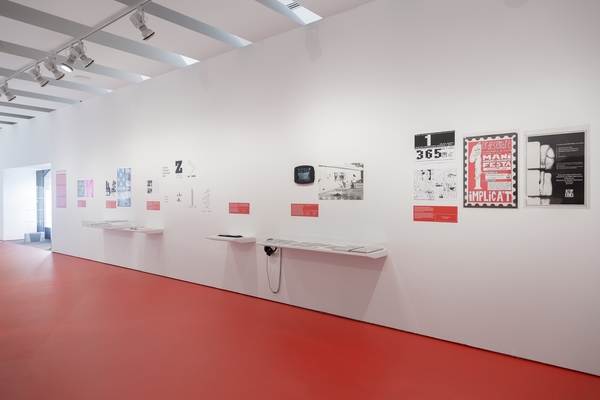
Vista de l’exposició Anarxiu sida. © Museu d’Art Contemporani de Barcelona (MACBA). Foto: Eva Carasol.
Intersexuals, persones racialitzades, transexuals, homosexuals, guerrillers, persones amb VIH. I en aquest sentit, podríem dir que, gràcies a la mostra Anarxiu Sida, organitzada pel Centre d’Estudis de Documentació del MACBA, el museu, almenys durant uns quants mesos, està menys buit de nosaltres.
La mostra és una més de les derives d’aquest treball de recerca entorn de les múltiples dimensions de la crisi del VIH/sida que l’Equipo re –format per Aimar Arriola, Nancy Garín i Linda Valdés- ha desenvolupat en els últims sis anys. I parlem de derives perquè, com ja anuncia el títol de la mostra, la seva metodologia de treball altera precisament les lògiques de l’arxiu o del museu, vinculades sovint a nocions conservadores entorn del què entenem per patrimoni.
Així doncs, en aquesta ocasió, la dificultat de fer dialogar materials relacionats amb dols, dolors, secrets, ocultacions, sentiments de culpa o festes clandestines, es posa al servei de dues línies argumentals i tres casos d’estudi en els quals Barcelona apareix com a constant, però sempre en relació amb d’altres contextos.

La primera línia argumental gira entorn de les “maneres de fer a l’esfera pública”. La primera peça d’aquesta seqüència és document de l’artista Xoán Anleo, que va realitzar per al Pavelló de Galícia de l’Exposició Universal de Sevilla de 1992 en el qual pot llegir-se “UNHA FORMA PUBLICA DE REPRESENTAR”. I aquest document se situa just al costat d’unes imatges corresponents a unes fotografies d’una acció imprevista del grup ACT UP Barcelona, realitzada el 1994 davant del Centre d’Arts Santa Mònica, on s’estava organitzant la mostra “Domini públic”. L’equació sembla senzilla: en un Estat Espanyol en el qual s’està programant i celebrant l’adhesió definitiva a les lògiques del capitalisme espectacular global, mitjançant estratègies de “brandificació” de les principals ciutats, aquestes peces, vinculades en el cas d’ACT UP a l’activisme entorn del VIH/sida, reclamen a les pràctiques creatives de situar-se en un lloc visiblement molest. En el cartell sostingut per integrants d’ACT UP Barcelona podia llegir-se: “Hi ha gent que es preocupa només un dia… Els afectats sofrim els 365 dies de l’any. No volem que et sentis solidari, volem que et sentis afectat”.
Al costat de materials de l’Estat Espanyol, s’amplia la perspectiva mitjançant la incorporació d’altres documents, descobrint fins i tot, en el programa del “Primer Encuentro Intercontinental por la Humanidad y contra el Neoliberalismo libre” organitzat per part del Ejército Zapatista de Liberación Nacional a Chiapas el 1996, una reflexió entorn del VIH/sida i la farmacodependència: “Los farmacodependientes no están excluidos del sistema neoliberal. Se les ha incluido como consumidores y víctimas de un poder económico que, amparado en las políticas de libre empresa y globalización, se ha constituido en un nuevo instrumento del capital que refuerza la dominación en contra de países y de grupos”.
Era allí on Keith Haring va trobar més xeringues.
Precisament la segona línia argumental recull aquesta premissa, perquè gira entorn de la “farmacologització de la vida”, és a dir, a aquell conjunt de consignes, no només artístiques, que van assenyalar com la vida, era controlada sense escrúpols per l’aliança entre el capital neoliberal i les grans multinacionals farmacèutiques. Així que aquest malestar és polititzat. Ja sigui mitjançant manifestacions en l’espai públic de Xile, amb pancartes que parlen d’“holocausto psicoterapéutico”, a través d’usos creatius inserits com a publicitat en els quals es parla de l’existència d’un “banc de drogues per a persones vivint amb VIH/sida”, o de peces com les del vinil de Pepe Miralles Dinero = Poder = Muerte (1993).
Aquestes dues línies s’han vist ampliades per tres casos d’estudi, el tercer dels quals, a l’entorn de la relació entre heroïna i VIH/sida a Barcelona, acaba de presentar-se fa pocs dies. Aquest cas conviu amb materials d’ACT UP Barcelona –primer cas d’estudi- i el mural de Keith Haring Tots junts podem parar la sida -segon cas d’estudi-. D’aquesta manera, es continua insistint en la necessitat de situar els sabers d’un “arxiu” en relació amb el seu context. En aquest barri del Raval, paradigma dels processos de gentrificació urbana, avui es discuteix on situar una ampliació d’un Centre d’Atenció Primària en termes banalment dicotòmics entre cultura i salut, ACT UP va confrontar ciutadans amb pancartes que reclamaven afecte i afectació. A uns metres d’aquesta acció, Keith Haring triava el 1982 la plaça Salvador Seguí per a dur a terme el seu mural, perquè deia que era allí on va trobar més xeringues. The city is always half empty of us.
L’exposició Anarxiu sida es pot visitar al MACBA, Barcelona, fins al 18 d’abril.


Recent Comments